
Exploring Kruger National Park: Wildlife, Camps, and Must-See Spots

Few destinations on Earth carry the same sense of wonder and wilderness as the Kruger National Park. Spanning nearly two million hectares across the northeast of South Africa, Kruger is a country-sized ecosystem (being more than twice the size of yellowstone park, and a quarter of Ireland), teeming with life and history. Established in 1898, it’s one of the oldest and most celebrated wildlife reserves in the world, a place where the rhythm of nature still dictates the day.
Within its vast boundaries, open savannahs meet dense riverine forests, granite outcrops rise from the bush, and winding rivers draw animals from every corner of the park. Lions bask in the early sun, elephants move quietly through mopane woodlands, and hornbills perch on acacia branches as herds of antelope graze below. It’s an ever-changing, self-contained world that feels both timeless and wild.
What makes Kruger remarkable isn’t just its wildlife, though few parks can match its abundance, but its accessibility. Unlike many remote safari destinations, Kruger is built to welcome everyone. You can explore it on a guided 4×4 adventure, or drive yourself along hundreds of kilometres of tar and gravel roads, stopping at rest camps, picnic spots, and lookouts along the way. It’s a safari that can be as rugged or as comfortable as you want it to be.
Over the decades, Kruger has become woven into South Africa’s identity, a place where locals return again and again, and where international visitors often experience their first glimpse of Africa’s untamed beauty. Whether you come for the Big Five, the landscapes, or simply the quiet of a sunrise drive, the park delivers something few places still can: a genuine sense of the wild.
Getting There, Gates, and Entry Costs
Despite its wildness, Kruger National Park is remarkably accessible. The park lies in the northeastern corner of South Africa, straddling both Limpopo and Mpumalanga provinces, and can be reached easily by road or air from most major cities. Its location along the borders of Mozambique and Zimbabwe places it within one of southern Africa’s most biodiverse regions, linking to a broader conservation area that extends beyond South Africa’s boundaries.
For most visitors, the journey begins in Johannesburg or Pretoria, about 450 kilometres away. The drive takes roughly five to six hours, depending on which gate you enter through and how often you stop. The roads are tarred and well-maintained, passing through scenic countryside and small towns that hint at South Africa’s rural charm.
Those preferring to fly can book direct flights to Skukuza Airport or Kruger Mpumalanga International Airport (KMIA) near Nelspruit, both offering connections from Johannesburg, Cape Town, and Durban. Eastgate Airport near Hoedspruit serves the central and northern regions, while Phalaborwa Airport provides quick access to the north-western section. These small regional airports are efficient and well-equipped, placing you at the park’s gates within minutes of landing.
Kruger has nine main entrance gates, each linked to nearby towns and serving different sections of the park.
In the Northern Region:
- Pafuri Gate – The northernmost gate, leading into one of the park’s most remote and biodiverse corners
- Punda Maria Gate – Serves the far north, near Thohoyandou and Louis Trichardt.
Central Region:
- Phalaborwa Gate – The main northern access point, linking to Letaba and Olifants camps.
- Orpen Gate – Ideal for reaching the central region and connecting to private reserves like Timbavati.
-
Paul Kruger Gate – Closest to Hazyview, convenient for the southern camps and popular for short visits.
Southern Region:
-
Phabeni Gate – The least congested gate normally and ideal for reaching Skukuza and Lower Sabie.
- Numbi Gate – Close to White River and Nelspruit, one of the original gates and historically significant.
-
Malelane Gate – Provides direct access from the N4 highway, perfect for travellers coming from Johannesburg or Eswatini.
-
Crocodile Bridge Gate – Near Komatipoort, good for access to the southeastern plains and excellent lion country.
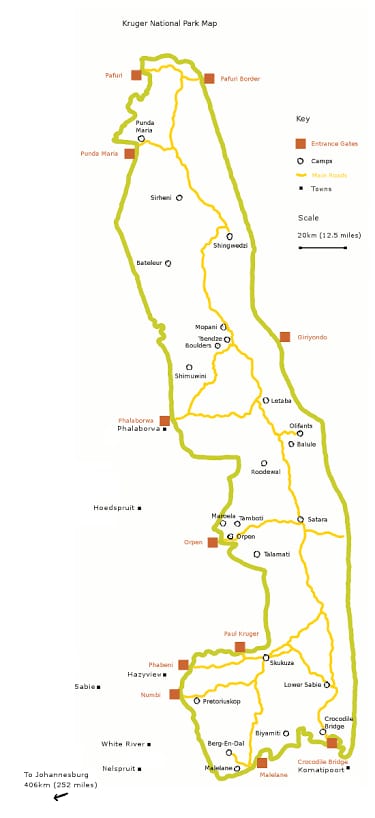
Most gates open at sunrise and close at sunset, with slight variations by season. Visitors are required to check in and out on the same day unless staying overnight in the park.
Entry fees, known as daily conservation fees, help fund Kruger’s anti-poaching and wildlife management initiatives. As of recent rates, South African residents pay around R130 per adult per day and R65 per child, while international visitors are charged roughly R460 per adult and R230 per child. Frequent travellers can save significantly by purchasing a SANParks Wild Card, which provides unlimited entry to all national parks in South Africa for a full year.
When planning your route, it’s best to decide on your entry and exit gates before booking accommodation, since distances inside Kruger can be deceptively long. What looks close on a map might take several hours to drive, especially with frequent wildlife sightings and speed limits capped at 50 km/h on tar roads and 40 km/h on gravel.
Whether you arrive by road from Johannesburg, fly directly into the park, or loop in from Mozambique or Eswatini, the transition is striking: one moment you’re in farmland and small towns, the next you’re surrounded by bushveld and bird calls, stepping into one of the most extraordinary ecosystems on the continent.

The Landscape and Regions of Kruger
Kruger National Park stretches for nearly 360 kilometres from north to south and about 65 kilometres across at its widest point, covering an area roughly the size of Israel or Wales. It borders Mozambique to the east and Zimbabwe to the north, with the Limpopo and Crocodile Rivers forming its natural boundaries. This vastness is what makes Kruger so extraordinary, and you’re not just visiting a reserve. In the Kruger you’re stepping into an entire wilderness system that changes subtly every few kilometres.
Be warned that Cellphone Signal in the park is intermitted at best, we have always found it most helpful to have a map on hand in the event we miss a turn or a road is closed, we also have a digital one on our cellphones that you could get here, which is freely avaialable on the krugerpark.co.za website, Physical maps are also available for sale at nearly all the stores in the park but they are definitely not cheap.
The park’s landscapes form a patchwork of ecosystems, each supporting its own network of plants and animals. In the south, near Hazyview, Malelane, and Skukuza, the bushveld is thick with marula, knobthorn, and leadwood trees, providing shade for grazing herds of impala, zebra, and wildebeest. The Sabie and Crocodile Rivers thread through this region, attracting elephants and hippos, while the dense vegetation gives leopards the perfect cover to hunt. This section of the park is renowned for its high wildlife density, making it a favorite for first-time visitors and photographers.
As you move into the central region, around Satara and Olifants, the terrain opens into classic savannah plains dotted with mopane and acacia trees. It’s lion country, a place where prides are often seen resting under trees in the midday heat. The grasslands here also draw large herds of buffalo and giraffe, making it one of the best areas in Kruger for traditional “plains game” viewing, where most of the big 5 sightings take place due to its viewability.
Further north, past Letaba and into the Pafuri region, the landscape shifts dramatically. The bush becomes more rugged, the trees more tropical, and the air heavier with heat. Giant baobabs, fever trees, and mahogany forests line the Limpopo River, home to rare species like nyala, eland, and the elusive Sharpe’s grysbok. Birdlife is exceptional here, particularly in the summer months, when migratory species fill the skies. The north’s remoteness and fewer visitors give it an entirely different character: quieter, slower, and deeply atmospheric.
Together, these regions form a living mosaic of 16 distinct ecosystems supporting over 2,000 plant species. The vegetation isn’t just backdrop, it defines the rhythms of life here. Rainfall, soil type, and altitude all shape what grows, and in turn, what feeds, hunts, and survives. From the golden grass plains of Satara to the riverine forests of the Sabie River, Kruger’s ecology is as intricate as it is immense.


Wildlife and Biodiversity
If Kruger’s scale is what makes it impressive, its biodiversity is what makes it truly extraordinary. The park is home to more species of large mammals than any other game reserve in Africa (over 140 in total) along with more than 500 bird species, 120 reptiles, and thousands of insects and smaller creatures that complete this complex ecosystem.
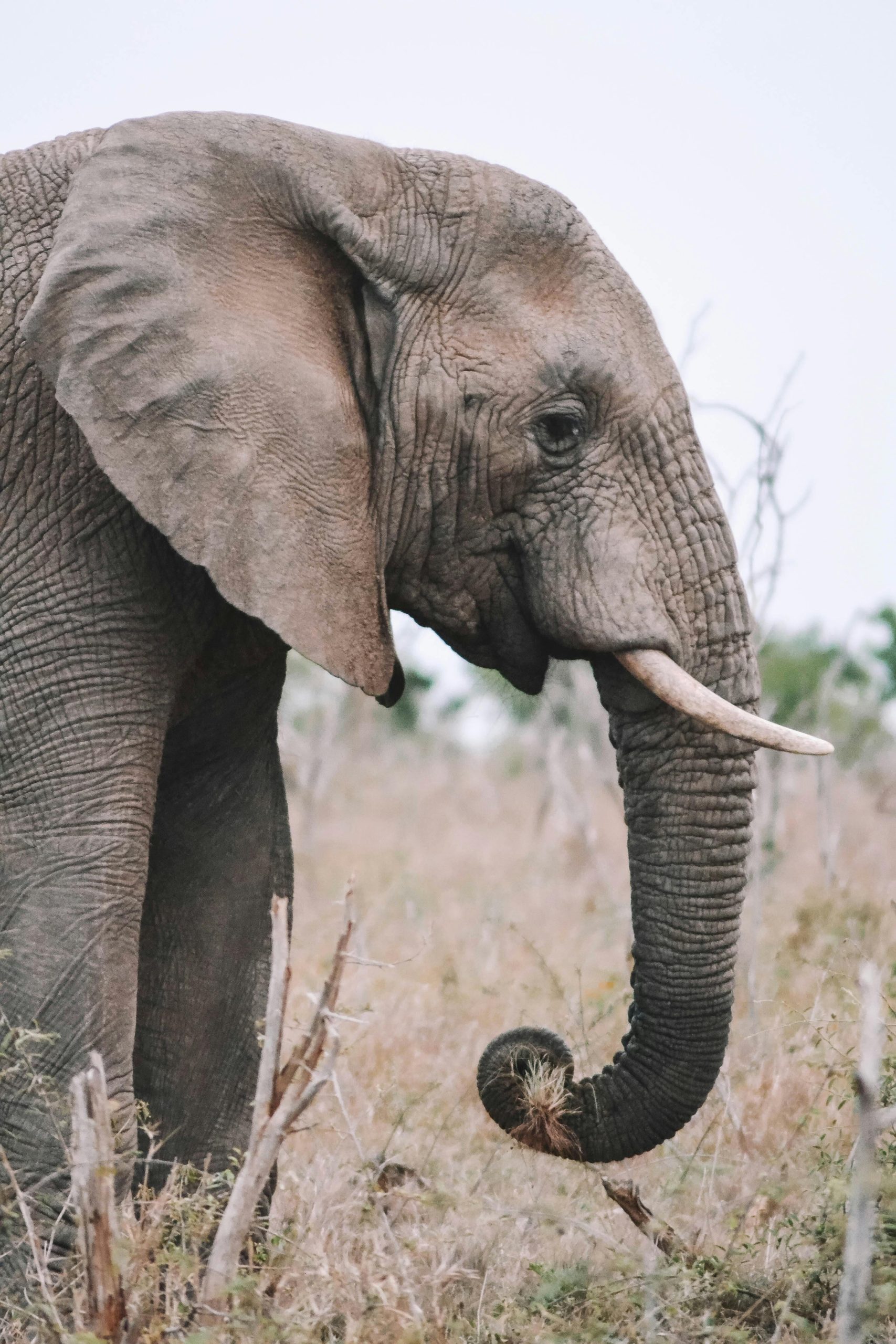
At the heart of every visit lies the hope of seeing the Big Five: lion, leopard, elephant, buffalo, and rhino. Each has its own rhythm and territory within the park. Lions thrive in the open grasslands around Satara, leopards prefer the dense riverine thickets near Skukuza and Lower Sabie, and elephants can be found almost everywhere, following ancient migratory routes that cross the park’s rivers and dry riverbeds. Sightings are never guaranteed, but few parks offer such consistent opportunities to see all five in their natural habitat.
Beyond the Big Five, Kruger teems with life at every turn. Cheetahs hunt in the open plains, wild dogs roam in scattered packs across the central and southern zones, and spotted hyenas patrol the roads at dawn. Herds of zebra, giraffe, and impala are ever-present, their numbers forming the backbone of the park’s predator-prey balance. Along rivers and dams, hippos, crocodiles, and waterbuck dominate the scene, while smaller creatures like mongooses, genets, and bushbabies appear after dark.
Birdwatchers often describe Kruger as one of Africa’s finest destinations. From the striking lilac-breasted roller to the southern ground hornbill, the diversity is staggering. Summer brings a flood of migratory species from Europe and northern Africa, making it the best time for serious birding, especially in the far north near Pafuri, where the fever-tree forests are alive with calls from tropical species seldom found elsewhere in South Africa.
Perhaps what sets Kruger apart most is the sense of continuity in its ecosystems. Here, predator and prey relationships remain largely undisturbed, and natural cycles unfold as they have for millennia. You might watch a pride of lions hunt on the plains in the morning, then later that same day, see vultures circling above the same area, each playing their part in an ancient rhythm of survival that defines the African bush.
Accommodation and Camps
Kruger National Park offers a wide spectrum of accommodation options, catering to every type of traveller from first-time visitors seeking comfort to seasoned safari-goers looking for seclusion and adventure. Staying inside the park allows you to fully immerse yourself in the bush, with wildlife and the rhythms of nature forming the backdrop to your visit.
SANParks Rest Camps
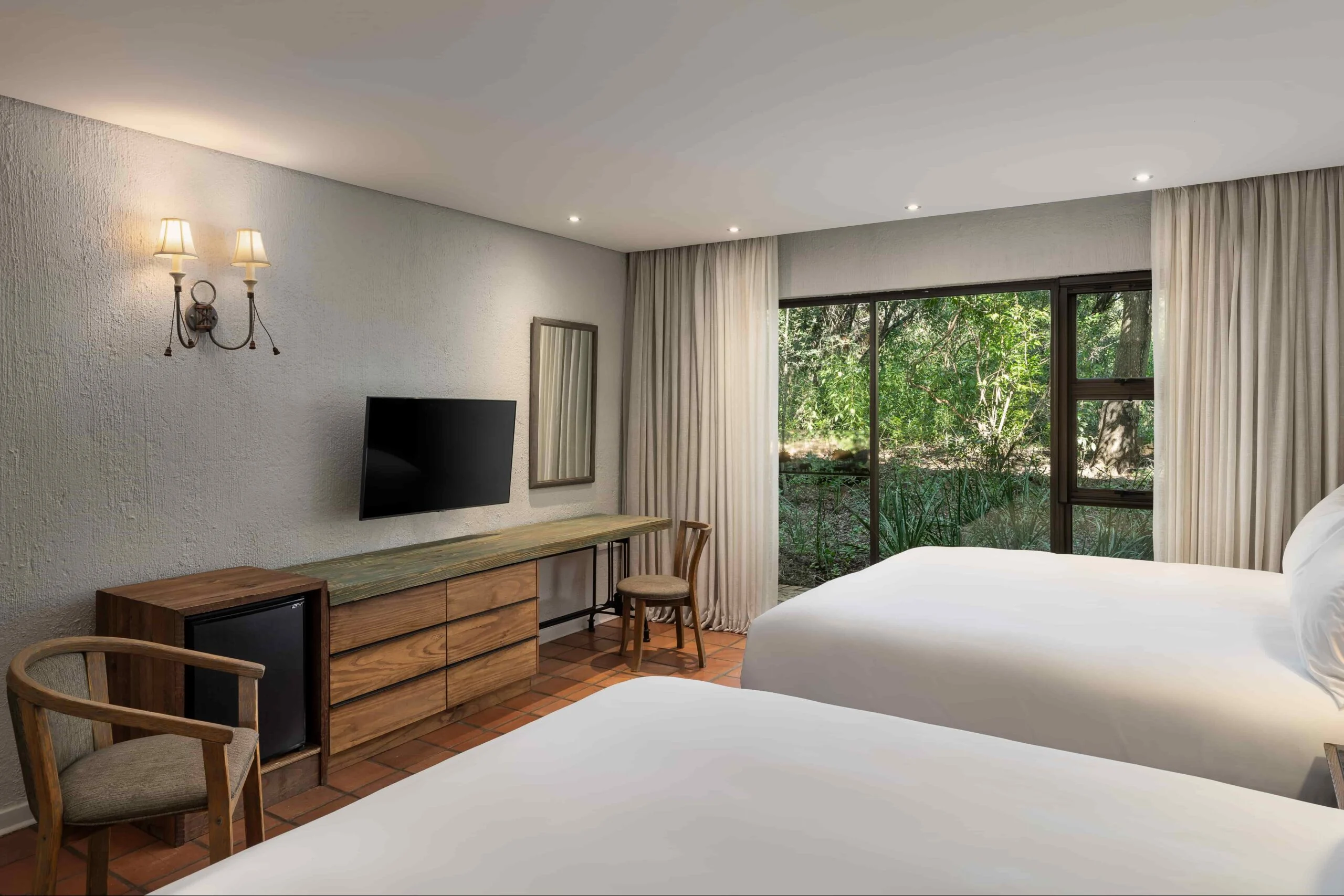
The backbone of Kruger’s accommodation is its SANParks rest camps, which range from simple self-catering chalets to fully furnished tented units. Camps like Skukuza, Lower Sabie, and Satara are among the most popular, providing easy access to high-density wildlife areas and essential facilities such as restaurants, shops, and petrol stations. Each camp is fenced for safety, but close enough to the wild that the call of hyenas, nightjars, and other nocturnal creatures forms a natural lullaby.
Skukuza, the park’s largest camp, doubles as a hub for both visitors and park operations, with extensive amenities including an airport, conference facilities, and a variety of accommodation styles. Lower Sabie offers spectacular river views and convenient access to southern savannah plains, while Satara is famed for its open grasslands, prime lion territory, and classic “big game” safari experience.
Bush Camps and Wilderness Options
For a quieter, more intimate encounter with the wilderness, Kruger also offers smaller bush camps and wilderness trails. Bush camps such as Biyamiti, Shimuwini, and Talamati are less frequented and unfenced, giving guests a sense of true remoteness. Multi-day wilderness trails, guided by experienced rangers, allow visitors to walk through the bush, track animals, and sleep under the stars an immersive experience that highlights the park’s raw, untamed character.
Private Lodges and the Greater Kruger Area
Beyond the public camps, the Greater Kruger area encompasses a network of private reserves on the park’s western edge. Here, lodges such as Sabi Sands, Manyeleti, and Timbavati provide luxury safari experiences with expert-guided game drives, open vehicles, fine dining, and personalized service. Wildlife moves freely between Kruger and these private reserves, meaning guests often encounter intimate, off-road sightings of lions, leopards, elephants, and rhinos. These lodges cater to visitors seeking exclusivity, comfort, and high-end safari experiences.
Booking and Practical Tips
Accommodation inside Kruger is in high demand, especially during school holidays and peak safari season. Bookings for SANParks rest camps open 11 months in advance, and popular camps can fill quickly. For travellers seeking flexibility or luxury beyond SANParks options, private lodges and nearby towns like Hazyview, Hoedspruit, and Phalaborwa provide excellent alternatives with easy access to the park.
No matter where you stay, Kruger’s accommodation system is designed to keep you close to the natural world. From the convenience of fully serviced rest camps to the intimate immersion of bush lodges and wilderness trails, every option allows visitors to experience the park’s wildlife, landscapes, and quiet magic from sunrise to the star-filled night.
Self-Drive vs Guided Safaris
Kruger National Park is one of the few major African reserves where visitors can safely explore on their own, making it accessible for a wide range of travellers. At the same time, guided safaris remain a popular choice for those seeking expert insight and a deeper understanding of the bush. Choosing between self-drive and guided experiences largely depends on your level of comfort, experience, and the type of safari you want to have.
Self-Drive Safaris
Self-driving in Kruger offers flexibility, freedom, and the chance to explore at your own pace. The park has an extensive network of well-maintained roads – including tar and gravel routes – connecting the major rest camps and key wildlife areas. Speed limits are modest (50 km/h on tar roads, 40 km/h on gravel), ensuring safety and giving you time to spot wildlife along the way.
Self-drive safaris allow you to plan your own schedule, linger at waterholes, photograph animals, and enjoy sunrise or sunset drives without the constraints of a set itinerary. It’s an ideal option for families, small groups, or those who prefer a more private, self-paced experience. Maps are available at rest camps, and GPS navigation can help, though mobile reception is limited in many parts of the park.
Tips for self-driving:
-
Start early in the morning to maximise wildlife sightings.
-
Keep a safe distance from animals, and never leave your vehicle except in designated areas.
-
Plan your route based on the wildlife you want to see and the camps where you plan to stop.
-
Bring fuel, snacks, and water; while many camps have shops, remote sections may not.
Guided Safaris
For visitors seeking deeper knowledge and expert observation, guided safaris are unmatched. These can be booked at rest camps, private lodges, or as part of multi-day packages in the Greater Kruger area. Guides are trained in animal behaviour, ecology, and tracking techniques, giving guests a richer understanding of the bush that’s difficult to gain on your own.
Guided options include:
-
Vehicle Safaris: Open 4x4s or covered vehicles allow for off-road tracking in some areas, enabling closer encounters with predators like lions and leopards.
-
Walking Safaris: Led by armed rangers, these multi-hour excursions provide insight into tracks, signs, and smaller wildlife, offering a ground-level perspective of the ecosystem.
-
Night Drives: Some camps and lodges offer evening safaris to observe nocturnal species such as hyenas, civets, and bushbabies.
Guided safaris are particularly useful for first-time visitors or anyone wanting to maximise sightings within a limited timeframe. They also offer a layer of safety and convenience, especially in less accessible parts of the park.
Which Should You Choose?
Many visitors combine the two approaches. A few self-drive days provide freedom and exploration, while guided safaris add expert insight and access to less accessible wildlife. If time allows, mixing both approaches gives a well-rounded Kruger experience, letting you appreciate both the independence of self-driving and the depth of professional guidance.

Best Time to Visit Kruger National Park
Kruger National Park is a year-round destination, but the experience varies significantly with the seasons. Understanding the park’s climate and wildlife patterns can help visitors choose the timing that best suits their priorities, whether that’s seeing the Big Five, enjoying birdlife, or avoiding crowds.
Dry Season (May to September)
The dry winter months are widely regarded as the best time for game viewing. Rainfall is minimal, vegetation thins, and animals gather around rivers and waterholes, making them easier to spot. Daytime temperatures are mild, ranging from 20°C to 26°C, while nights can be chilly, particularly in June and July.
Birdlife is less active than in summer, but many species remain, and migratory birds start arriving toward the end of the season. The dry season also coincides with South Africa’s peak tourist months, so rest camps and popular areas can be busier, requiring advance bookings.
Wet Season (October to April)
The summer wet season brings warmer temperatures, afternoon thunderstorms, and lush vegetation. While game can be harder to spot in the dense bush, the park comes alive with newborn animals, particularly antelope and zebra, creating dramatic predator-prey interactions. Birdwatching reaches its peak as migratory species flood in, adding colour and diversity to the skies and treetops.
Road conditions can be more challenging during heavy rains, particularly on gravel routes, but the landscapes are at their most vibrant, and photography is spectacular. The wet season also sees fewer tourists, offering a quieter, more intimate experience in many camps.
Special Considerations
-
School Holidays: July and December–January see increased visitor numbers; early bookings are essential.
-
Temperature Variations: Northern and southern regions of the park can differ significantly, with the northern Pafuri area often hotter and more humid in summer.
-
Wildlife Highlights: Dry months are best for spotting the Big Five, while summer is ideal for witnessing bird migrations, newborn wildlife, and lush scenery.
Ultimately, the “best time” depends on what you want from your visit. For first-time visitors aiming to tick off the Big Five, May to September offers the most reliable viewing conditions. For returning guests, photographers, or birding enthusiasts, the green season delivers a dynamic and visually stunning Kruger.