A Pilanesberg Kind of Love
You know a place is special when three kids turn down a Bahamas cruise for a South African game reserve. True story. One Easter, my brothers and I had the choice: sun-soaked Caribbean or the familiar call of the bush. Unanimous vote—Pilanesberg.
We were young, sure, and probably didn’t fully grasp the magnitude of what we were passing up. But honestly? I don’t regret it. We still haven’t made it to the Bahamas, and with the current exchange rate, I’d rather not come back home just to file for bankruptcy.
Pilanesberg has been a fixture in our lives for as long as I can remember. It’s where my love for the bushveld was forged, one roaring lion and dusty game drive at a time. I’ve seen my fair share of game reserves over the years, but I always find myself back here. There’s something about those ancient volcanic hills… a kind of untamed nostalgia that never quite leaves you.
Getting There
If you’re flying into Joburg or based anywhere in Gauteng, the drive to Pilanesberg is refreshingly straightforward. Most of the journey follows highways and national roads, with only the last 40km or so being on a well-maintained local stretch.
Nearly all GPS systems will pick up the park and surrounding lodges without issue. Still, we’ve had a few hiccups in the past, especially when certain road links on the GPS were outdated, so we now make a point of double-checking hotel locations on all major navigation apps beforehand. Trust me, it’s a worthwhile step that’s saved us from a few “scenic detours” (and the inevitable arguments that come with them).
We’re based near the airport ourselves, so we take the same routes most locals and International visitors would use. One important tip: don’t drive this route at night. The road to Sun City and Pilanesberg can be risky after dark, with potholes, livestock, and other unexpected surprises. Stick to daylight hours—not only for safety, but because the scenery is worth soaking in along the way.
Overview of the park
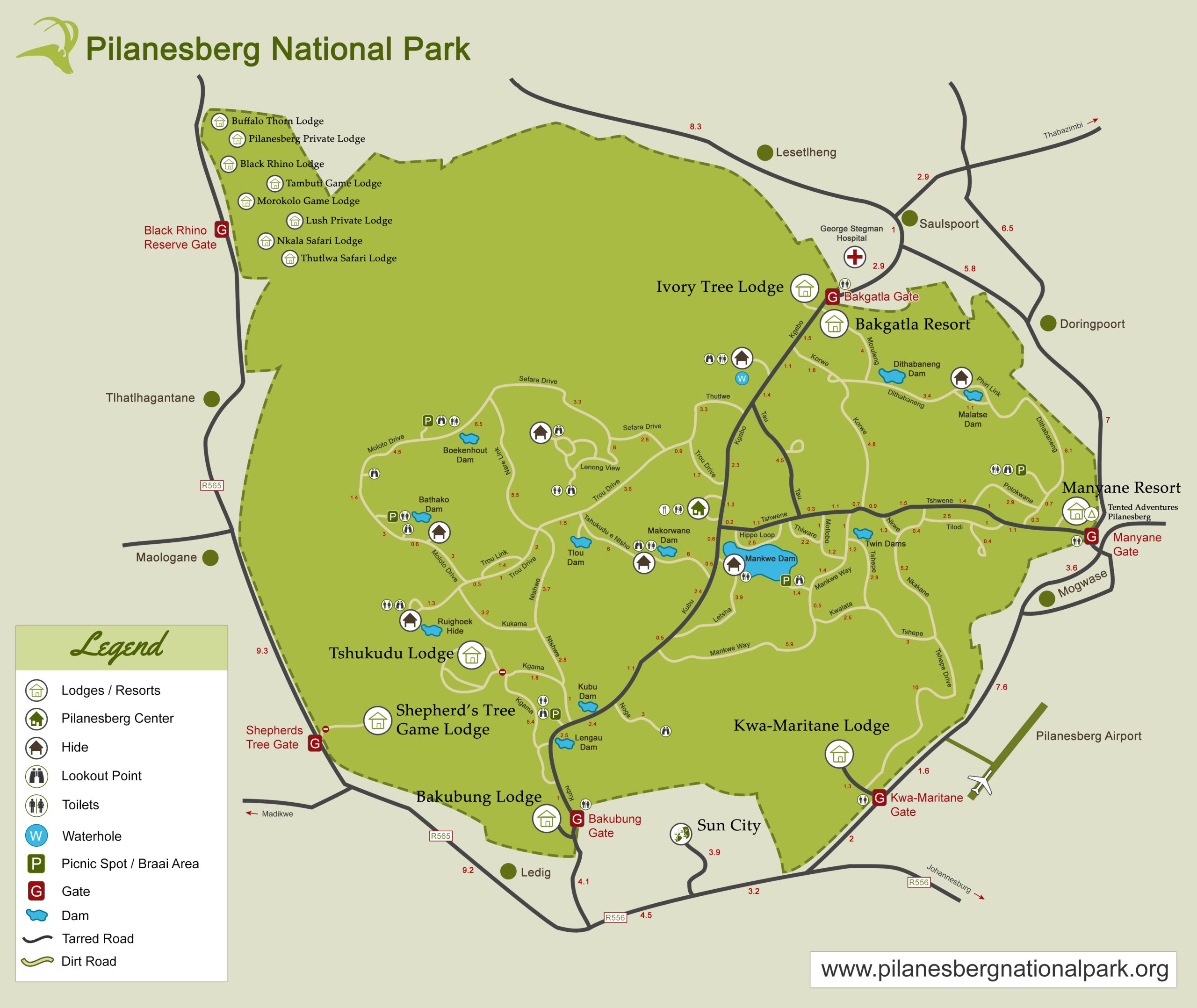
Pilanesberg sits just two hours outside of Johannesburg, nestled in the ancient crater of a long-dead volcano. The 550km² reserve is surprisingly compact, especially when you consider that it punches well above its weight in biodiversity. Even though it’s the fourth largest park in South Africa, it feels intimate. Think: Big 5, over 7,000 animals, 360 bird species, and more than 200km roads, which, regrettably, are so pockmarked with potholes they start to resemble gravel patches stitched into the tar. At one point, I found myself driving on the shoulder just to spare my tyres, and judging by the worn tracks, I wasn’t the first.
Combined with a surprisingly varied landscape, the compactness makes animal sightings far more likely than in some of the country’s sprawling giants. It also means you can pack a lot into a weekend trip—ideal for Joburgers looking for a quick bush fix without the full Kruger-level mission.
This is very much the park for you if you want to just kick back and spend 4 hours at a hide and look at the animals, you will find terrapins and hippos at some of the most unlikely of places and most of the hides are centred around water sources, this makes them ideal for looking and finding some of the most unique creatures. The constant clicking of cameras, lots of pictures to be taken, and even more pages turning, trying to determine if that bird had red or yellow legs, are the constant whispers in the background, and i honestly love it.
Self-Driving and Exploration:
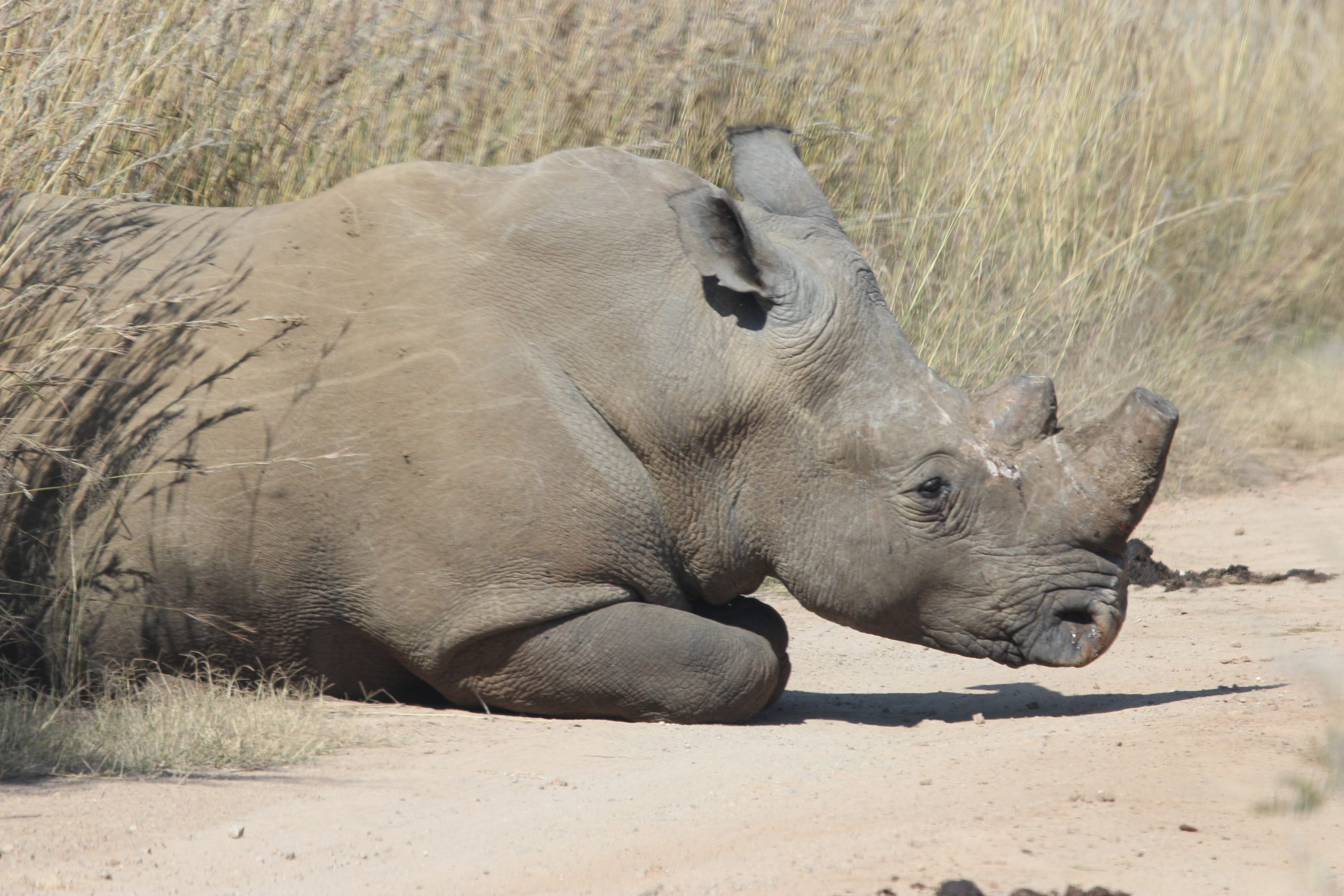
Road conditions aside, theres lots to see on a self drive, you will spot plenty of girrafes, elephant and the occasional lion, although the park is compact, do not be mistaken, nothing is lying waiting for you to spot them, you will see a wildbeest through the trees on one occasion and a zebra coming to fog up your side windows on the next. The animals are clearly used to cars, but they are definitely not tame, Your window making too much noise when you are trying to take that award-winning photo, and you will see nothing but bushes and dust in all directions. Most cars will be able to handle the tar and most of the dirt roads, but there are definitely 4×4 sections that have some serious pulling power needs. We tried, we failed, and turning around is easier when you’re not trying to avoid the lions you spotted 10min ago.
Game Drives:
Although not as badly priced as some of the other exclusive lodges in the country, game drives a pretty much the same experience as doing it yourself with a lot less room for doing your own thing, they also tend to pull into a hide here and there especially during the mid day water drinking sessions, but i would only say book a game drive if you’re doing something unique like a night drive, which you cant do in the park on a self drive, or a sundowner session which will end in some form of snacks and champagne. the only real difference is the higher ride, and the almost guarantee that you will catch a glimpse of some truelly extrodanary sightings, whether that be a kill site, a birth or some elusive animals. There is always a story being shared and something to learn from rangers, from snake sightings to plants used in local medicine. Game drives have their place, although they are a bit of a nuisance to most self drivers.
But—and there’s always a but—the park’s charm does take a bit of a knock when nature calls. The public toilets scattered across the park range from passable to you’d-rather-risk-a-bush. Some are barely hanging on, neglected to the point of being unusable. It’s a jarring contrast to the raw beauty surrounding them, and frankly, for a park this well-loved and well-visited, it’s an insult to your bladder and your sense of smell.
Where We Stayed: Bakgatla Lodge
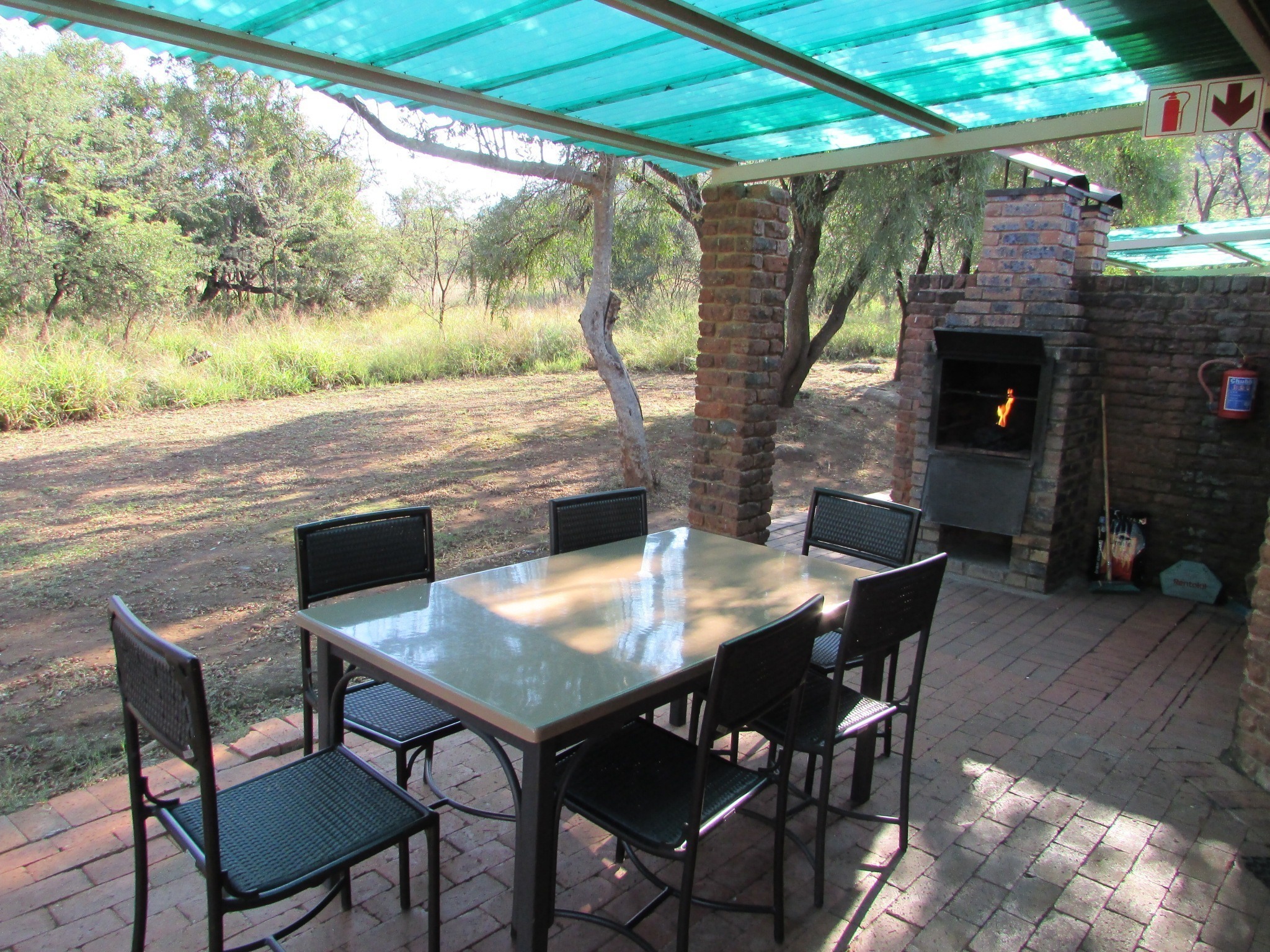
For this trip, we bunked at Bakgatla Lodge, one of the more budget-friendly options inside the park. It’s a solid three-star setup that consistently overdelivers on service. Our chalet had space for a small family, main bedroom with en-suite, a second bathroom, and a loft that sleeps three. It came with a fully equipped kitchenette and a braai area that’s borderline regal. Although we dont spend much of our time at the lodge itself, it is always nice knowing that if you want to just chill at home base, you can.
The bonus? Two aircons, TV(although we avoid it entirely on these trips), and a backup generator—essential when Eskom decides to test your wilderness spirit.
This place is built for families. There’s a massive swimming pool, games room, campsite, and a surprisingly well-stocked little kiosk (meat, charcoal, ice cream, coffee, toothpaste, you name it). If you forgot something major, there’s a mall 10km down the road, where we normally buy our holiday odd groceries and whatever braai meat they have.
There’s also an on-site restaurant—basic menu, but the food’s decent and well-priced (R70–R150 per meal). No frills, no fuss.
Just bring your own beer, they almost always don’t have draught on site, which is a bit of a shame considering some campers might fill their retirement coffers in a single sitting.
Other Lodges Worth a Look
While Bakgatla and its sister lodge, Manyane (which we unfortunately lost in 2 devastating fires), are our usual go-tos, Ivory Tree and Shepherd’s Tree offer a step up if you’re craving a bit of pampering. Kwa Maritane and Bakubung are still on my list, but their prices tend to flirt with ultra-luxury territory. Availability is another story altogether.
Things to Do (Besides Staring at Lions)
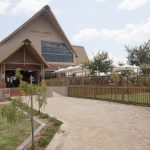
Let’s talk about the Pilanesberg Centre. This mid-park pit stop might look ordinary at first glance, but its setting is pure magic. Grab a bite (sandwiches, pizzas, and burgers mostly), restock your drinks and snacks, and watch the wildlife waltz past. There’s a salt lick just meters from the deck—we counted over 30 species in an hour. Talk about lunch with a view.
Plan to stay longer than expected, though—you might get a surprise visit from the local troublemaker: a notorious bull elephant with no respect for boundaries. He’s known to casually stroll into the supposedly enclosed centre area like he owns the place. The game rails do absolutely nothing to deter him, and he’s not exactly a gentle giant. I’ve got the photos to prove it—me frozen mid-bite with sheer panic on my face and that tusker looming in the background. He’s been known to charge, and trust me, those flimsy wooden railings offer more psychological comfort than actual protection.
Apparently, elephants can’t lift their legs high enough to step over them. Still, I felt a lot safer once he’d buggered off. Moral of the story? Don’t try to be a hero. He will kill you. No jokes.
We didn’t hit Sun City this time (just 20 minutes away), but if you’ve never been, it’s worth a day trip. Casinos, the Valley of Waves, jet skis, Africa’s longest zipline (note: this is a speed line, not a canopy tour)—it’s like Vegas and Victoria Falls had a baby.
In a Nutshell
Here’s where we drop the gloss and talk straight. Pilanesberg is a 3.5-star park with 5-star potential. It still holds a sacred spot in my heart—but damn, it needs some TLC.
The game hides? Still excellent. Even the ones that were burnt down have been rebuilt—and built well. But the picnic sites and braai areas? Yeah… not great. Broken benches, crumbling concrete stands, and a general air of being forgotten. You can see there’s been effort recently, but it needs to happen faster. The park feels like it’s leaning too hard on its legacy instead of evolving with intention. And don’t get me started on the toilets again—I might talk the talk and walk the walk in the bush, but that smell will break even the hardiest ranger. I’m not even going to get into the visual trauma.
Now, the Pilanesberg Centre? That place is a gem. Honestly, it couldn’t be better. It’s just a pity the rest of the park doesn’t quite live up to it.
We didn’t see as many animals this trip, but recent heavy rains probably played a role. Nature doesn’t work on a schedule and that’s part of the deal.
Talking price, it’s not cheap. Entrance fees are on par with the rest of the SANParks lineup, despite lower overall standards. That said, Pilanesberg brings a lot of its own magic. If you’re staying a few days, get the three-day pass—it makes more sense. If you’re just doing a quick visit, the single-day option still delivers solid value. And for the love of all things wild, take a physical map(you can download the one we used here as found on their Website). GPS has a habit of playing games here, though not quite as badly as it does in Kruger.
As for the lodge: comfy, but showing signs of wear. Nothing major, just small things that should be sorted before guests notice. That said, the peace and quiet was unmatched. No monkey raids, no baboon harassment, just bush baby visits, white tailed mongooses just passing by the haunting calls of lions and black-backed jackals echoing through the night, whilest sipping glasses of papsak near the crackling fire. That’s the kind of soundtrack, money cant buy.
Our Ratings:
Value for Money: ★★★☆☆
Decent for families and mid-range travelers, though the park’s condition doesn’t always justify the price tag.
Experience & Service: ★★★☆☆
Friendly staff, but the facilities needs more than a lick of paint.
Uniqueness & Atmosphere: ★★★★☆
The Volcanic Basin gives it a surreal, cinamatic edge.
Convenience & Accessibility: ★★★☆☆
Easy drive from Joburg, with plenty of access points, just watch out for potholes.
Would I Recommend It? Yes—if you know what you’re in for.
Final Verdict: ★★ – A very good stop – Its okay, not great, not terrible, but comfortably in the middle
Pilanesberg might not have Kruger’s scale or polish, but it brings its own charm in spades. It’s the kind of place that surprises you—not always because it’s flawless, but because it’s real. And when the lions roar at night or that cheeky bull strolls into the centre uninvited, you’ll feel it too: that unmistakable Pilanesberg kind of love.