If its your first time travelling to cape town, let me be clear right off the bat, 48 hours in Cape Town is simply not enough time to see all it has to offer. Anyone who has been here will tell you that. But if 48 hours is what you have got, you had better make them count, and this the Mothercity will not make it hard for you.
Cape Town is the kind of place that hits different to the rest of South Africa. The mountain is there before you even clear the airport. The ocean is everywhere. The food is ridiculous, in the best kind of way. The light, especially late afternoon, changes something in the sky that has no real explanation. When people say that Africa has the best sunsets, we agree and Cape town has something more. I have been here more times than I can track at this point, and the city still gets me every single time.
This is a two-day itinerary built for someone who wants to see the real Cape Town without wasting a single hour, if you manage to do them all, big ups but try get atleast 4 on your next trip. These are the spots that actually deliver.
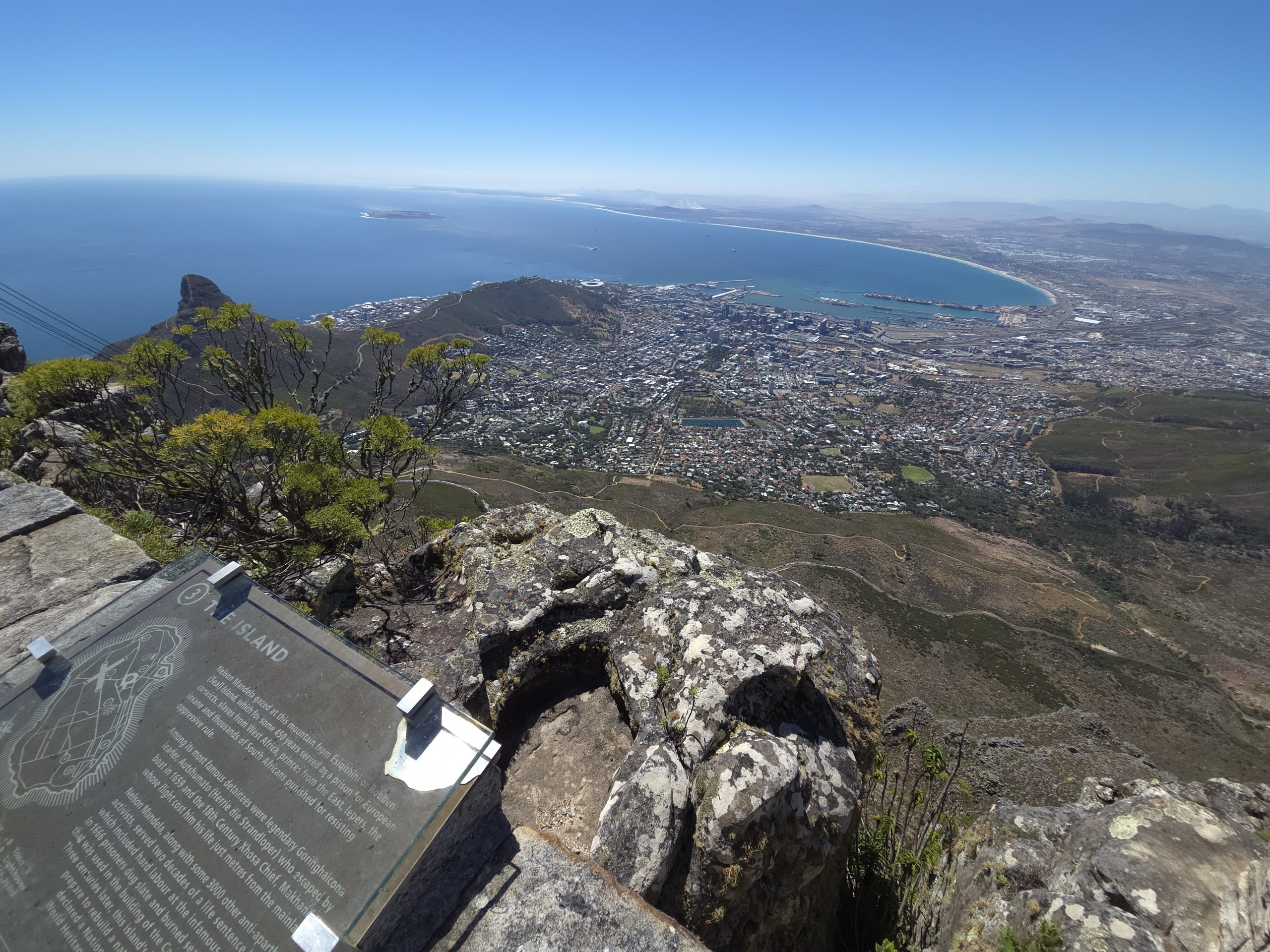
Ascending Table Mountain
Start day one with the mountain. Do it first. Do not put it off until day two and risk losing it to cloud cover, the Cape is notorious for pulling that table cloth down without warning, and if you miss Table Mountain you will be genuinely upset with yourself. I speak from experience.
The Table Mountain Aerial Cableway runs from the Lower Cable Station off Tafelberg Road and gets you to the top in under ten minutes. The views from the summit are the kind that make people go very quiet. Cape Town stretches out below you in every direction, the Atlantic, the City Bowl, Robben Island sitting low in the bay, the Twelve Apostles draped along the spine of the Peninsula. There is nothing quite like it in South Africa. Tickets are availabe on Webtickets and cost R490 per adult and R250 per child.
If you are fit and have the time, the Platteklip Gorge trail is a solid hike to the top, DO NOT do this alone! Roughly two hours up through the gorge, well-marked, and worth every step. But the cable car is faster and the view from the rotating cabin is its own experience.
Spend an hour or two up top. Walk the paths. Eat something at the cafe. Then come back down before midday and head into the city. You can very easily spend half a day here, but this is about getting the most out of your time.
Budget tip: Book your cable car tickets online in advance, you save time and sometimes grab a small discount. The return fare is the better deal. If you are hiking up, the cable car down still costs money, so factor that in.
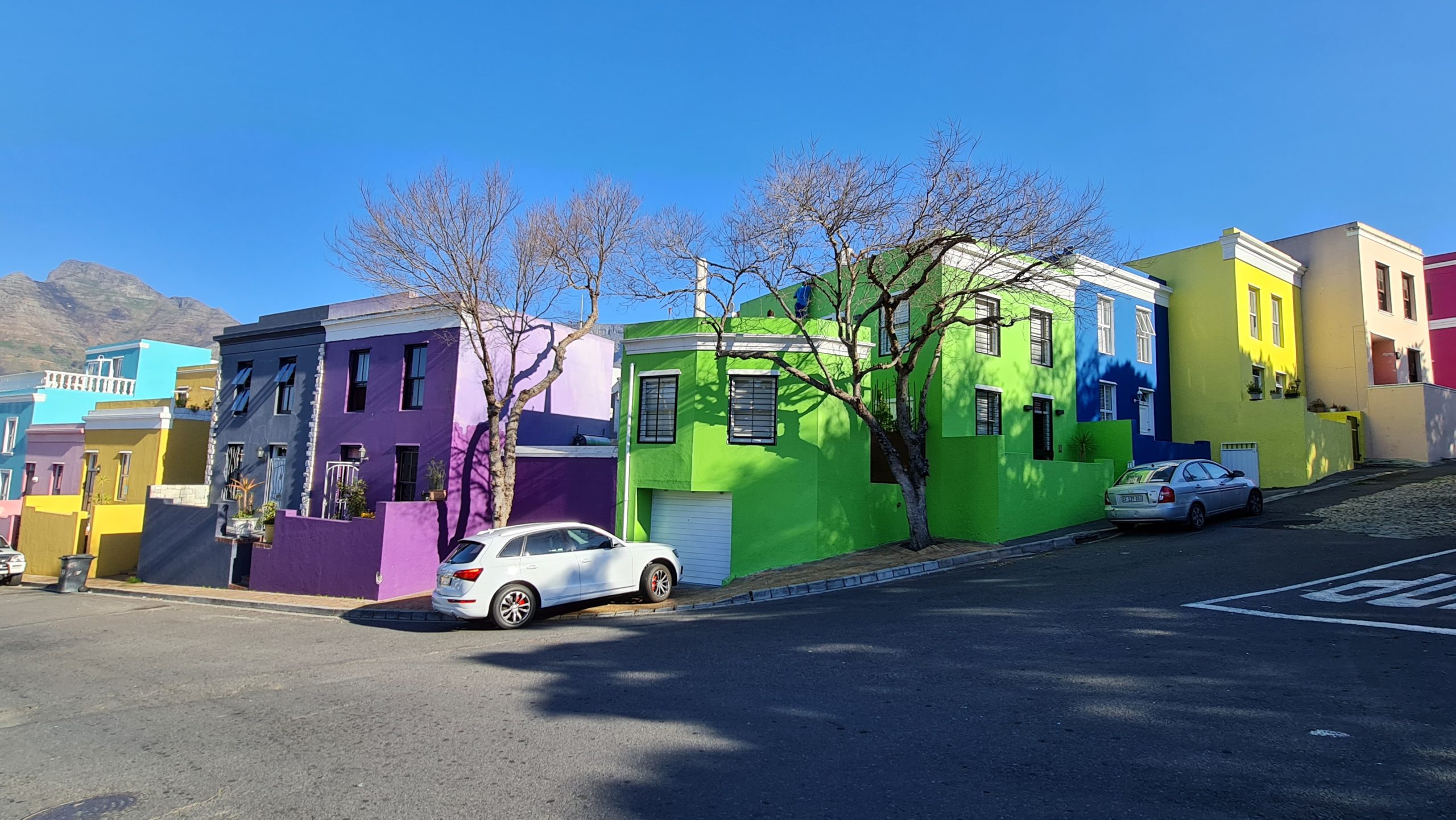
Walking Through Bo-Kaap
From the mountain base, Bo-Kaap is a short drive into the city, roughly 30min in peak traffic. This is one of Cape Town’s oldest residential neighbourhoods, a tight grid of cobblestone streets lined with brightly painted houses in pink, yellow, cobalt blue, and every shade in between. It is one of those places that looks almost too photogenic to be real, and yet here it is. If you’re hooked on instagram, you’ll get your fix here, top notch photos in every direction.
Bo-Kaap is the historic heart of the Cape Malay community, and that history is genuinely interesting. The Bo-Kaap Museum on Wale Street is worth a quick visit for context, it is small, affordable (R20 per person), and well put together. The Cape Malay food in this area is also seriously good. Grab a koeksister or a samoosa from one of the local spots and eat it on the street. You can thank me later.
Take your time walking the streets, look up at the facades, and resist the urge to rush. Bo-Kaap is one of those places that rewards slow movement.
Budget tip: The neighbourhood itself is free to explore. Skip the overpriced tourist restaurants on the main road and find the local spots tucked inside the streets, better food, better value, more authentic experience.
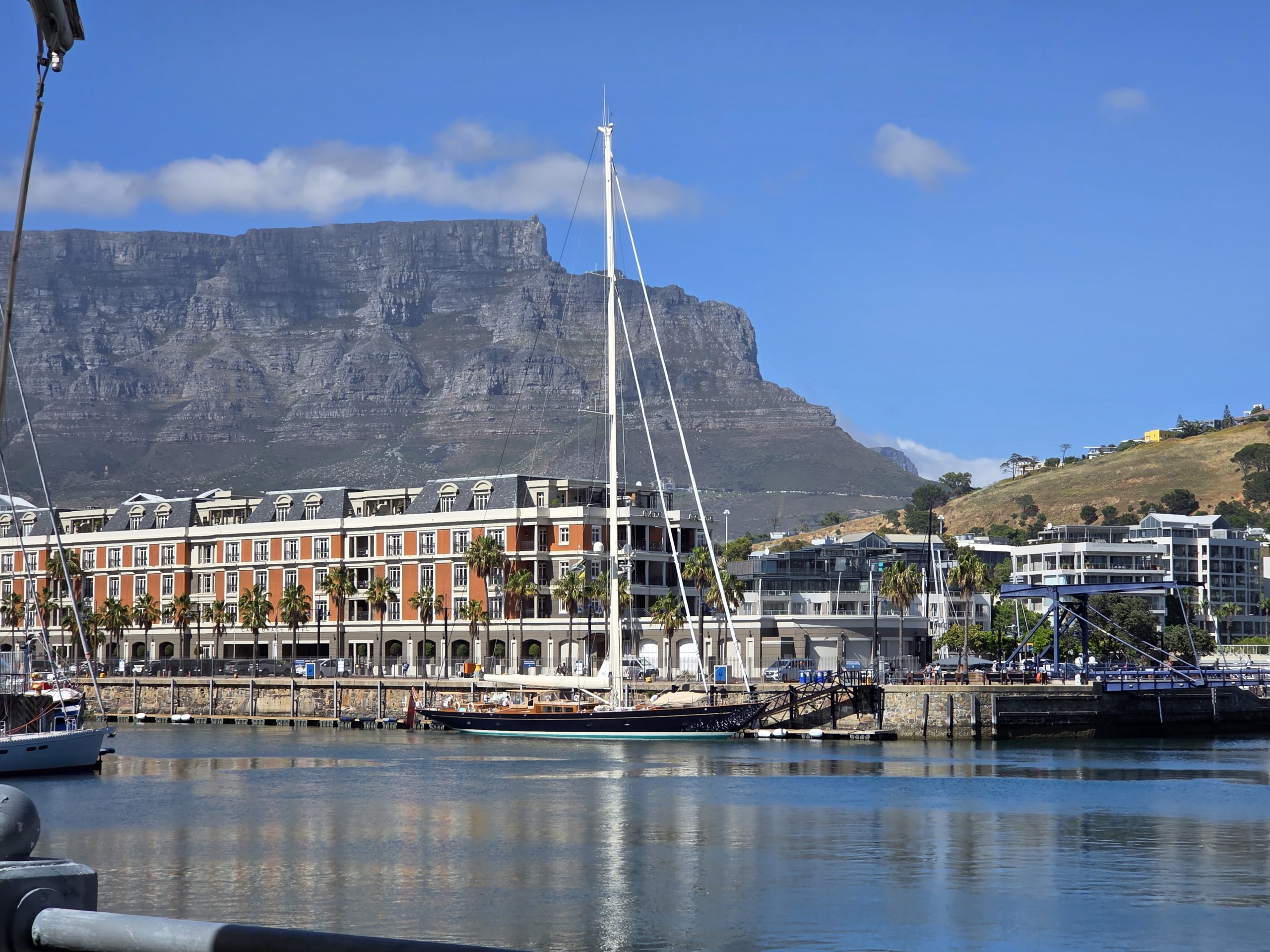
V&A Waterfront
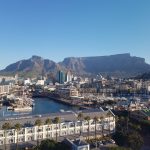
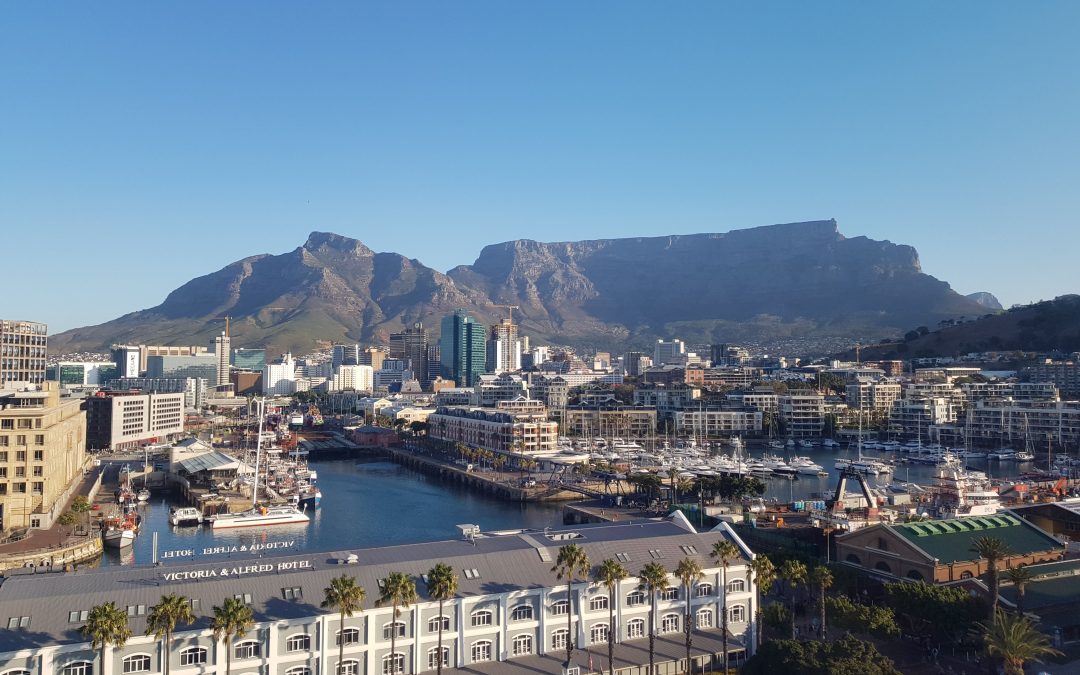
The V&A Waterfront gets a lot of tourist traffic, but do not let that put you off, It’s not tourist trappy if you stick to basics. It is genuinely one of the best-designed waterfronts in the country, clean, well-maintained, and set right against the working harbour with Table Mountain filling the backdrop. The mountain from this angle is the postcard shot everyone has seen, and it is still worth seeing in person.
The Waterfront has good food, craft market stalls, and the kind of people watching that keeps you occupied longer than expected, you can easily spend time here from lunch to sunset. Grab a late lunch at one of the harbour-side restaurants and settle in. Our current favourite is the Flint & fennel restaurant, located at the intercontinental hotel. You get the best of both worlds as its slightly outside the main area and its a great place to see the sunset, just pack your fat wallet. like most things Cape Town its Europe prices.
If you have a bit more time on your hands, the Two Oceans Aquarium is right here at the Waterfront, and if you have any interest in marine life it is an easy stop. If you’re trying to get as much in as possible, skip this, two oceans is a day trip on its own. The Cape is where the Atlantic and Indian Oceans meet, and the aquarium puts that in context beautifully. The kelp forest exhibit is genuinely impressive. There is a touch pool for kids and regular dive shows if the timing lines up.
Budget tip: The Waterfront itself costs nothing to walk around. Some of the best restaurants in the country are located here and if you want to go somewhere specific, book in advance.
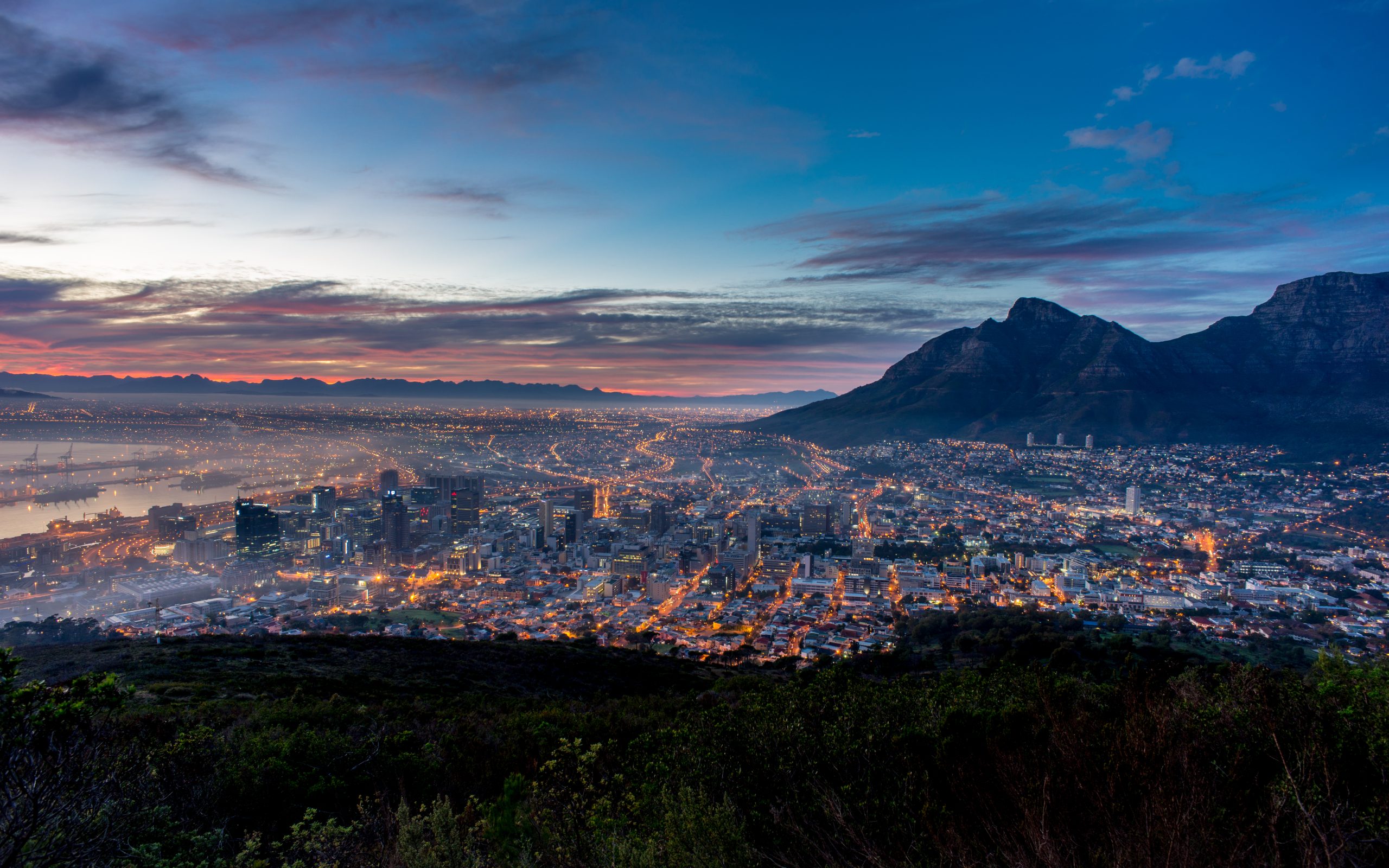
The Cape Town Sunset: Pink, Gold, and Purple
Cape Town’s sunsets are not normal. I want to be clear about that. This is not just a good sunset city, its breathtakingly beautiful, and it has something to do with the way the light interacts with the Atlantic, the mountain, and whatever the Cape weather is doing at that particular moment.
On the right evening, the sky goes through gold first, then a deep pink that looks almost artificial, then purple settles over the mountain like smoke. If there are clouds at the right altitude, it gets even more dramatic. If you opted not to hang about in V&A, then Signal Hill and Lion’s Head are the classic spots to watch it from, both accessible by car or a short walk, and both deliver an unobstructed western view out over the ocean.
After a day of moving around Cape Town in summer heat, there is also this thing that happens in the early evening. The temperature drops. A fresh, clean breeze rolls in off the Atlantic. The air changes quality completely. After a day of sweat and sunscreen and warm city pavements, that cool Atlantic freeze is one of the best things Cape Town does. Sit somewhere with a drink, watch the sky do its work, and just be there for a bit. It really is one of the easiest ways to get your zen back.
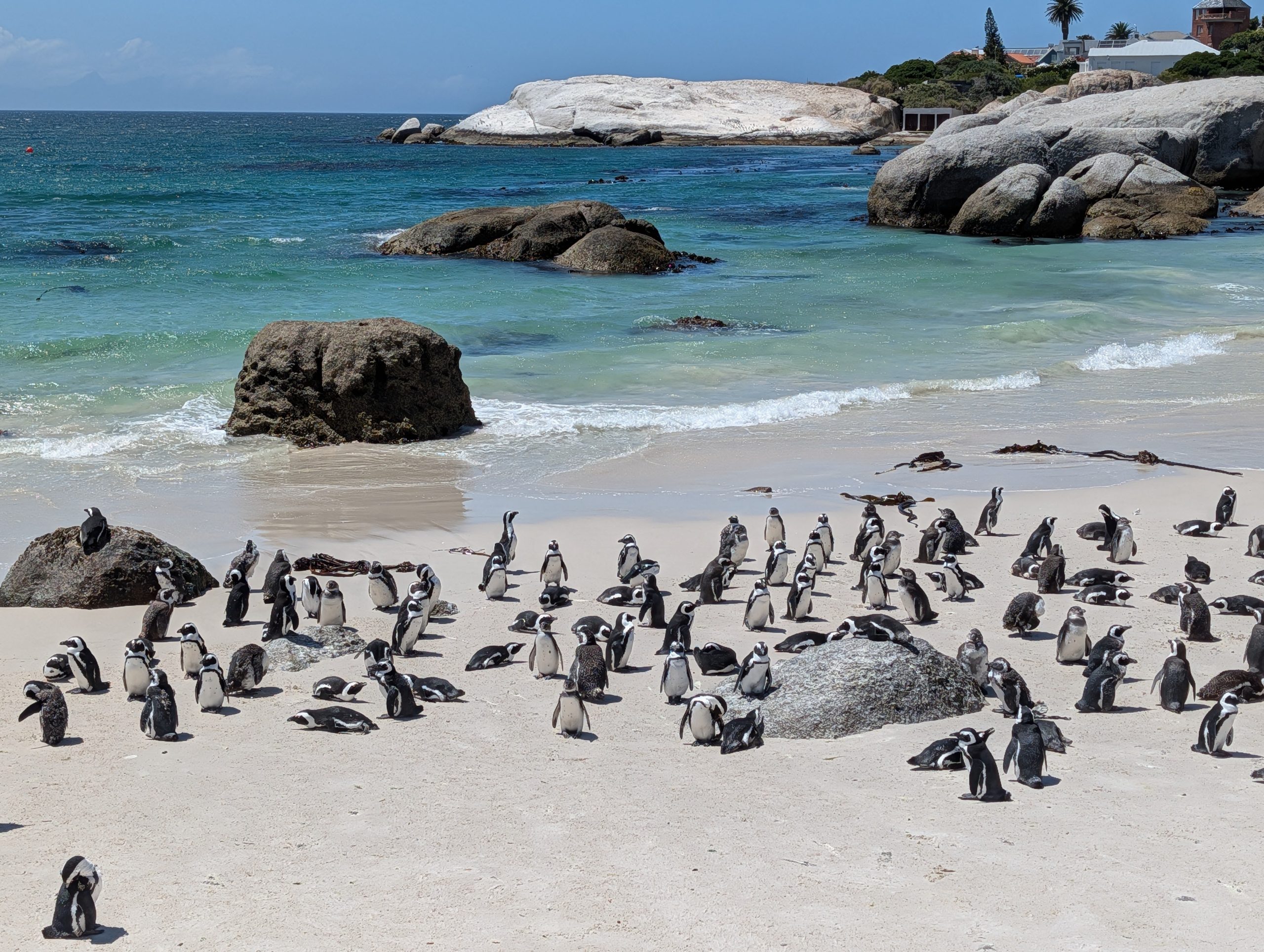
Boulders Beach and the Penguins
Get an early start on day two, Late Sleepers will miss out on this one. Boulders Beach is about 45 minutes south of Cape Town along the Peninsula, a sheltered cove near Simon’s Town that is home to one of the most unexpected colonies on the continent. African penguins. Hundreds of them. Nesting, waddling, swimming, generally going about their lives with total indifference to the humans watching them.
This is a SANParks conservation area, so there is an entry fee that helps fund the protection of the colony R60 if you’re local, make sure you have your ID. Internationals pay R180, rules are simple, no ID, Interational rate. The boardwalks keep visitors out of the nesting areas without cutting off any of the good viewing angles. If you get there before the tour buses arrive, you will have a much more peaceful experience and better photos.
The beach itself is beautiful beyond the penguins. The boulders create calm, shallow pools that are genuinely swimmable if the weather is right. Simon’s Towns also has a strong naval history, and worth a walk around before you head back north.
Budget tip: Book SANParks entry online to avoid queues. Try arrive at 8am if you want the penguins to yourselves, the crowds build fast as the morning goes on.
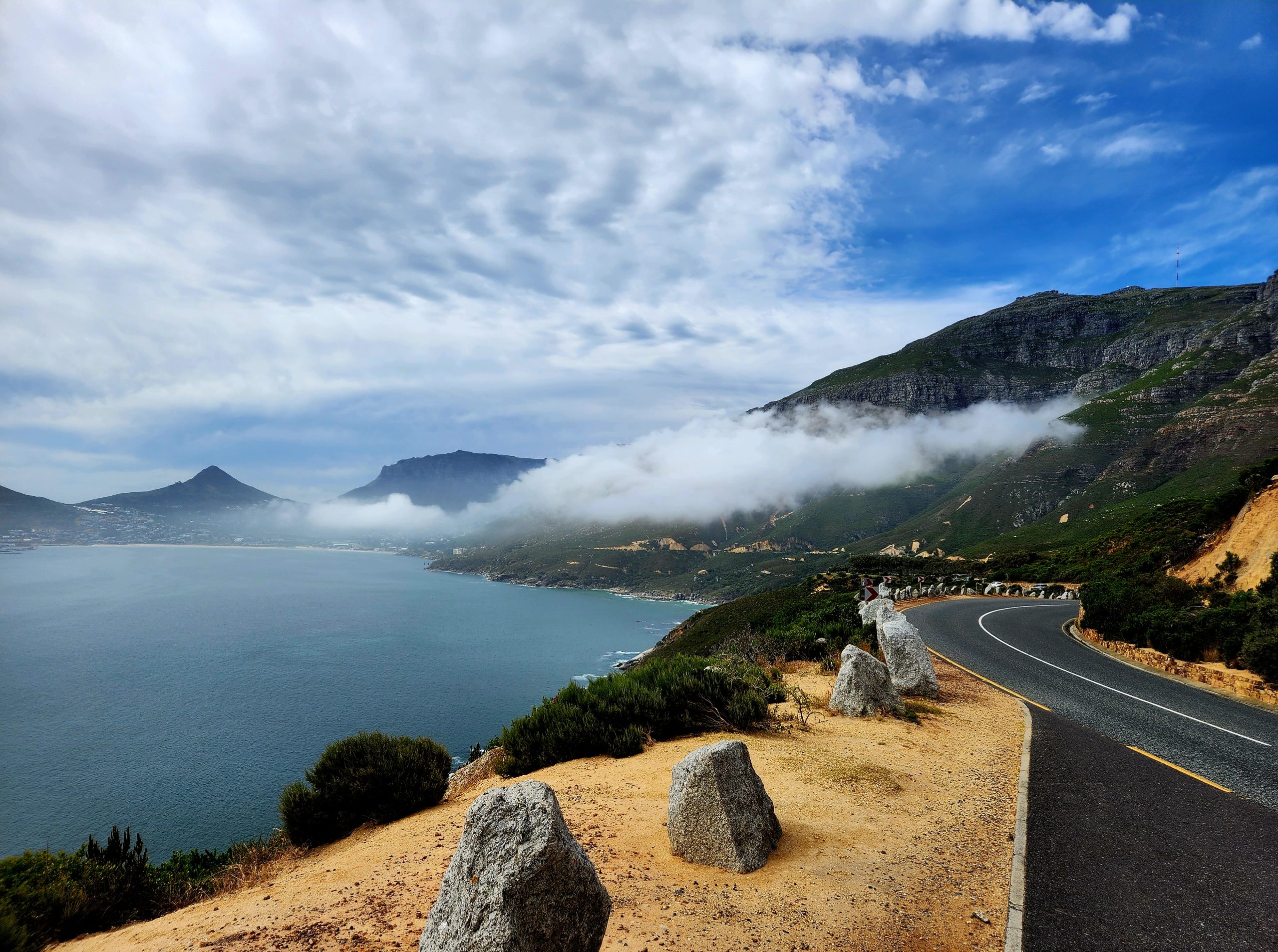
Chapman’s Peak: The Drive You Do Not Skip
Chapman’s Peak Drive is one of the most spectacular coastal roads in the world. This is not something the locals just say it is listed among the great scenic drives globally, and it earns that. The road was carved into the sheer cliffs of Chapman’s Peak on the Atlantic side of the Peninsula, running for about nine kilometres between Hout Bay and Noordhoek with the ocean dropping away hundreds of metres below you to the right. Its a little out of the way when driving back but its absolutely worth the detour.
There are pull-off points along the route to stop and take it in properly. The views down the coastline toward Noordhoek Beach are extraordinary. The engineering of the road itself, cut into near-vertical rock face, is impressive in its own right and has let my mind wonder on how more than once. On a clear morning with good light, this is could very easily become the highlight of this trip.
Note that Chapman’s Peak Drive has a toll fee for private vehicles. It is not expensive like R60, and it is absolutely worth it.
Budget tip: The toll is per vehicle, not per person, if you are travelling in a group, split it and it costs almost nothing per head. Early morning gives you the best light and the least traffic.
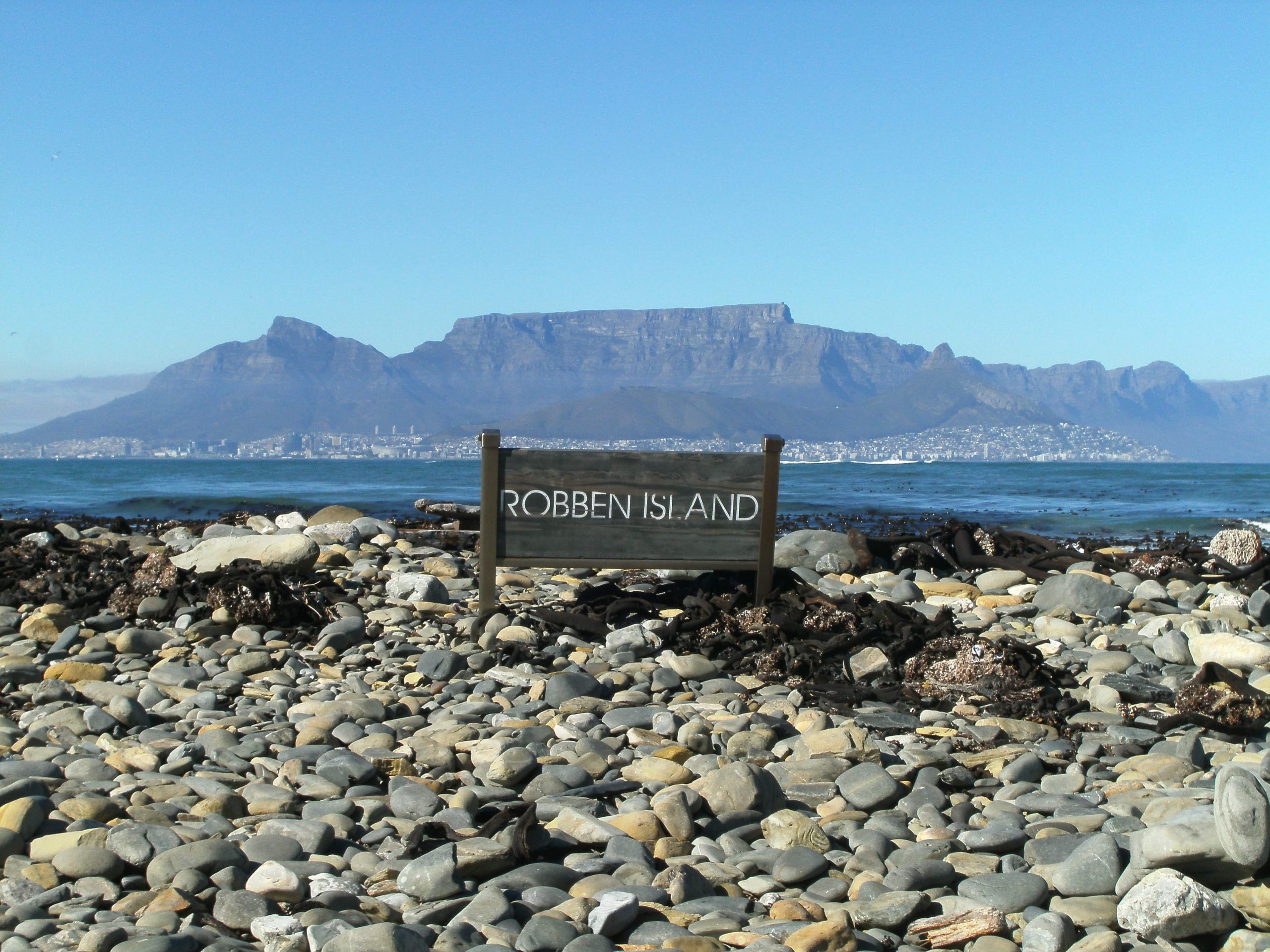
Robben Island
Robben Island sits about 11km offshore in Table Bay, visible from the Waterfront on any clear day. Nelson Mandela was held here for 27 years, in prison. That alone makes it one of the most significant sites in South Africa, and the visit is unlike anything else you will do in Cape Town.
The ferry departs from the Nelson Mandela Gateway at the V&A Waterfront, and the tour is run through the Robben Island Museum. The guided tour of the island is led by former political prisoners, people who were actually held here. Hearing about that history from someone who lived it, standing in the limestone quarry where Mandela and others were forced to work, walking past the cell, it is a genuinely moving experience that no amount of reading can replicate. It really reminded me of the Apartheid museum in Johannesburg but with more depth.
Book well in advance, especially in peak season. The ferries are normally filled up months into the future but have also stuck some luck last minute. The full trip including the crossing takes about three to four hours, so plan your afternoon around it. Cost wise this was the most expensive thing on any of our trips, setting you back R800 per person atleast.
Budget tip: Book directly through the Robben Island Museum website for the best availability. The entry fee includes the ferry and guided tour. There are concession rates for South African citizens and residents with valid ID.
Frequently Asked Questions
How do I get around Cape Town for this itinerary?
A hire car is the most practical option. The Peninsula stops, Boulders Beach, Chapman’s Peak, are not easily done by public transport in a two-day window. Rideshare apps (Uber and Bolt both operate in Cape Town) work well within the city itself.
When is the best time of year to visit Cape Town?
Summer (November to February) gives you the best weather for outdoor activities, warm, long days, and the mountain is usually clear. That said, it is also peak season and prices reflect that. Autumn (March to May) is arguably the most underrated time, the heat softens, the crowds thin, and the light is extraordinary.
Do I need to book Table Mountain in advance?
Yes. Book your cable car online before you arrive. In peak season the tickets sell out and the queues are long. If you are planning to hike up, no booking is needed for the trail itself, but you will still need to pay for the cable car down if you plan to use it. Do not plan to take the hike on your own though, under any circumstances!
Is Robben Island suitable for children?
It depends on the age and temperament of the child. The content is heavy, apartheid history, political imprisonment, forced labour. For older kids (10 and up) with some context, it is a powerful and educational experience. For younger children, the ferry crossing can also be rough depending on conditions.
Can I visit Boulders Beach without booking?
Walk-in entry is available but you risk delays at the gate in peak season. It is worth booking through SANParks online to guarantee entry and save time. Early morning is consistently the best time to visit, quieter, cooler, and better light for photos.
Is Chapman’s Peak Drive open year-round?
It is generally open year-round but can close temporarily after heavy rain due to rockfall risk. Check the status before you go, especially if you are visiting in winter. The toll is payable by cash or card at the gate.
My Take
Cape Town in 48 hours is not a complete Cape Town experience. This is an introduction. But it is a very, very good one. The mountain, the penguins, the Bo-Kaap, Robben Island, Chapman’s Peak, the Waterfront, and those sunset. These might be considered tourist clichés. but they are genuinely exceptional, and seeing them back to back across two days gives you a real sense of what makes this city work. By no means is this a cheap Cape Town trip, this experience will set you back R3000 per person on average excluding the accommodation and based on moderate indulging at high end restaurants.
If I had to cut one thing from the list, I’d reluctantly drop the aquarium, not because it isn’t worth doing, but because the other stops are non-negotiable. The aquarium earns its place on a longer trip. This trip covers the bulk of the unique stops and includes the highlights out of all our experiences. There is nowhere else in South Africa that has so much to offer in one place. The combination of natural beauty, history, and food culture is genuinely singular.
The only drawback to this trip is you will need a car or reliable rideshare for this itinerary, this is one trip where having family living nearby might be worth asking for. Public transport exists but will slow you down. Most sites are well-signposted and easy to navigate.
Come back for a week. You will want to.